
A flip-flop is a basic building block used in digital circuits to store information. In simple terms, it is a small electronic unit that can hold one bit of data, either 0 or 1. If you are wondering what is flip flop, it is a key element that helps digital systems remember data even when the input changes. The flip-flop circuit plays an important role in digital systems because it provides memory and control functions. Flip-flops are widely used in computers, memory units, counters, registers, and digital clocks. They are a core part of flip-flop in digital electronics, as they help control data flow and timing.
In this blog, we will clearly explain what is flip flop, how a flip-flop circuit works, and discuss the different types of flip-flop used in digital electronics.
What is a Flip-Flop in a Circuit?
A flip-flop in a circuit is an electronic component that is used to store data in digital systems. In simple words, a flip-flop circuit can store only one bit of information at a time, which can be either 0 or 1. When people ask what is flip flop, the easiest answer is that it is a small memory element used in digital electronics. Unlike combinational circuits, where the output depends only on the current input, sequential circuits depend on both the current input and previously stored data.
Flip-flops are part of sequential circuits because they remember past values. This memory feature is what makes a flip-flop in digital electronics so important. By storing data, a flip-flop circuit helps digital systems perform tasks in an organized and controlled way. Memory in digital circuits allows computers and devices to process information step by step, and flip flops in digital electronics act as the basic units that make this memory possible.
Why Flip-Flops Are Used in Digital Circuits
Flip-flops are used in digital circuits mainly because they can store and control data efficiently. A flip-flop circuit is capable of holding one bit of data, which makes it useful for temporary data storage in digital systems. Flip-flops also help in synchronizing signals, ensuring that data changes happen at the correct time and in the proper order.
This synchronization is especially important in clock-based systems, where operations depend on timing signals. In flip-flop in digital electronics, these components act as basic memory elements used in registers, counters, and processors. They play a key role in managing timing and maintaining stable outputs. Because of these features, flip flops in digital electronics are essential for building reliable and well-organized digital circuits.
Basic Terms Related to Flip-Flops
To understand how a flip-flop circuit works, it is important to know some basic terms related to flip-flops. A clock signal is a repeating signal that controls when the flip-flop should change its state. It helps keep all operations in a digital system properly timed. Triggering refers to how the flip-flop responds to the clock signal.
In level triggering, the output changes as long as the clock stays at a certain level, while in edge triggering, the output changes only at the rising or falling edge of the clock. Set and Reset are control inputs used to force the output to 1 or 0. The output, called Q, shows the stored value, while Q̅ shows its opposite. Propagation delay is the small time taken by a flip-flop circuit to change its output after receiving an input.
Types of Flip-Flops
Flip-flops are classified into different types based on their inputs and working behavior. Each flip-flop circuit is designed to solve specific problems in digital systems. Below are the main types of flip-flop used in digital electronics.
1. SR Flip-Flop
The full form of SR flip-flop is Set-Reset flip-flop. It is one of the simplest forms of a flip-flop circuit and is used to store one bit of data. It has two inputs called Set (S) and Reset (R), along with outputs Q and Q̅.
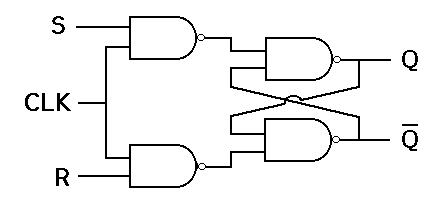
The working principle is simple: when the Set input is active, the output Q becomes 1, and when the Reset input is active, the output Q becomes 0. If both inputs are inactive, the output remains unchanged, which means the circuit remembers its previous value.
In the truth table of an SR flip-flop, one condition is considered invalid—when both Set and Reset are active at the same time. This creates confusion in the output.
Advantages of SR flip-flop include simple design and easy understanding. Limitations include the invalid input condition, which reduces its practical use in complex flip flops in digital electronics.
Also know: Best Data Labeling Software to Use in 2026
2. JK Flip-Flop
The JK flip-flop was introduced to overcome the limitations of the SR flip-flop. It is an improved version of the SR flip-flop circuit. The inputs are named J and K instead of Set and Reset.
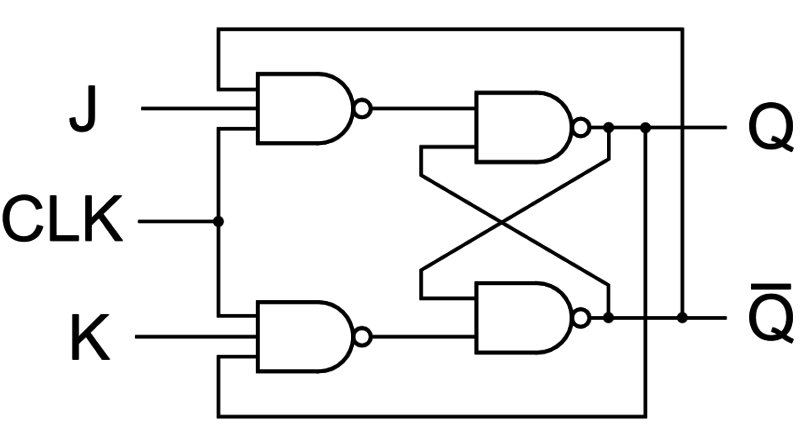
The main improvement is that the JK flip-flop removes the invalid condition found in the SR flip-flop. When both J and K inputs are active, the output toggles, meaning it changes from 0 to 1 or from 1 to 0.
The working principle of the JK flip-flop makes it more reliable for digital systems. According to its truth table, the output depends on the combination of J, K, and the previous output.
Because of its flexibility, the JK flip-flop is widely used in counters, registers, and control circuits. It is an important flip-flop in digital electronics, especially where controlled toggling is required.
3. D Flip-Flop
The full form of D flip-flop is Data flip-flop or Delay flip-flop. This flip-flop circuit is designed to eliminate the confusion caused by multiple inputs. It has only one data input called D, along with a clock signal.
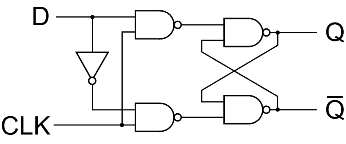
The working of a D flip-flop is very simple: whatever value is present at the D input is transferred to the output Q when the clock signal is triggered. This makes it very stable and easy to use.
Because of its simple design and reliable behavior, the D flip-flop is one of the most commonly used types of flip-flop. It is widely used in registers, memory units, and data storage systems.
In flip flops in digital electronics, the D flip-flop is preferred when clean and predictable data storage is required.
4. T Flip-Flop
The full form of T flip-flop is Toggle flip-flop. It is a modified version of the JK flip-flop where the J and K inputs are connected together to form a single input called T.
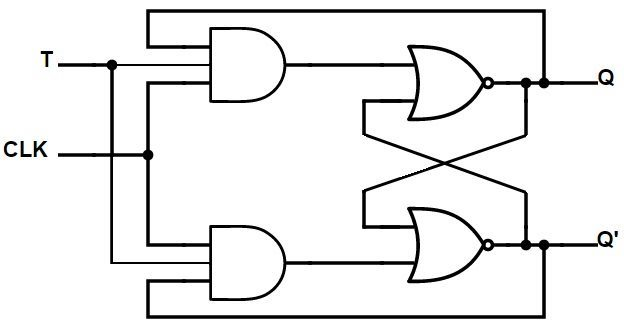
The working principle of the T flip-flop is based on toggling. When the T input is 1 and a clock pulse is applied, the output changes its state. If the output was 0, it becomes 1, and if it was 1, it becomes 0. When the T input is 0, the output does not change.
Because of this toggling behavior, the T flip-flop is mainly used in counters and timing circuits. This flip-flop circuit is very useful for counting operations and frequency division.
Among the types of flip-flop, the T flip-flop is simple and efficient for sequential counting applications.
Flip-flops are simple circuits that store one bit of data and help digital systems remember information. The flip-flop circuit is very important in digital electronics for timing and control. Different types of flip-flop like SR, JK, D, and T are widely used in modern electronic devices and computers.
Also know: Best Electronic Circuit Simulation Software
Frequently Asked Questions
Q1. What is the main function of a flip-flop?
Ans. The main function of a flip-flop is to store one bit of data, either 0 or 1. A flip-flop circuit helps digital systems remember information and control the flow of data in a timed manner.
Q2. Which flip-flop is most commonly used?
Ans. The D flip-flop is the most commonly used type because of its simple design and reliable operation. It is widely used in registers, memory units, and data storage applications in flip flops in digital electronics.
Q3. What is the difference between a latch and a flip-flop?
Ans. A latch changes its output as long as the input is active, while a flip-flop changes its output only when triggered by a clock signal. This makes flip-flops more stable and suitable for modern digital systems.