Main LogoLight Logo
  • Reviews
  • Top 10
  • How To
  • Tech News
  • OS
    • Windows
    • MAC
    • iOS
    • Android
  • Categories
    • Driver Updater
    • Cyber Security
    • Games
    • Fitness
    • Entertainment
    • Tips & Tricks
Tech News
by Monil

How To Find Key Moments In YouTube Videos Via Google Search

September 22, 2019
1

In today’s digital world, YouTube is the world’s most popular video-sharing platform; always trying to bring something new to the table – so you can enjoy the latest music videos, upload original content, and share it all with a massive audience.

To make YouTube more pragmatic, Google is rolling out a new feature to help users find specific content in any YouTube videos through its search engine.

So, now if you want to find the exact moment of a punchline or a specific content of a tutorial, you don’t need to watch the whole video clip.

The new feature will require YouTube content creators to provide the necessary timestamps of their videos, describing the specific parts in the video description.

According to Google, it will allow users to quickly scan to find whether a video has what they’re looking for, without having to sit and watch the whole video.

“When you search for things like how-to videos that have multiple steps, or long videos like speeches or a documentary, Search will provide links to key moments within the video, based on timestamps provided by content creators. 

You’ll be able to easily scan to see whether a video has what you’re looking for, and find the relevant section of the content. For people who use screen readers, this change also makes video content more accessible,” Google’s product manager Prashant Baheti wrote in a blog post on Tuesday.

Here is the example of a Podcast tutorial where you can see a new “In this video” timeline with “specific key moments” marked by Google even before you start watching the whole thing.

Below “In this video” timeline, there’s a set of small video clips with brief video descriptions that can be tapped to immediately navigate to specific points within a video. 

If the creator provides the timestamp and labels information inside the video description then Key Moments will appear, but only for the English videos uploaded on YouTube. Here are numerous guidelines that you should follow while formatting labels and timestamps for your video description. 

  • Make sure to format the timestamp in the set format – [Hour] : [Minute] : [Seconds]. 
  • Set every timestamp on the new line in your video description. 
  • Give the label of the timestamp on a similar line. 
  • Ensure that the label includes at least one or two words. 
  • Link the timestamp to the particular point in the video. 
  • Always lists the timestamp in sequential order in the description.

According to the Company, this new feature will not only make it easy to find specific key moments in YouTube videos but will also make video content more accessible for people using screen readers.

So, if you want to be a part of a beta program to test this new feature with other video providers, then Google has a form for you.

To enable the ‘Key Moments’ feature for your videos, here are the Google Form and Developer Docs where you can register to join the Early Adopters Program.

Author

Monil

Monil is a professional writer whose forte is absorbing a lot of data and help large technical organizations convey their message clearly across multiple products. An engineer by qualification, his affinity for design enables him to write to inspire, energize, and influence various audiences to uncover their true potential. When not writing, Monil is likely to be found listening to music, traveling, or simply excavating into his favourite cuisines.

View all posts

Related Posts

Vitalij Kacanovskij on the evolution of digital product design: from the first interfaces to today

February 5, 2024
0

Abstract: This article is devoted to the study of the evolution of digital design, starting from the first graphical interfaces to modern solutions based on artificial intelligence and augmented reality. The purpose of the study is to trace the development of key concepts of UX/UI design and their influence on the creation of intuitive and convenient interfaces. The article examines the key stages in the development of digital design, from graphical interfaces in the 70s to the concept of “mobile-first” in the 2000s, as well as the role of new technologies in the future of UX design.

The results of the study show that the evolution of design is closely related to changing user needs and technological progress. The practical application is that it helps designers and developers of digital products better understand the principles of creating effective interfaces that can adapt to the needs of users, improving their experience of interacting with products. Particular attention is paid to the role of personalization and new technologies that will shape the future of UX/UI design.

The Evolution of Digital Product Design – A Multilayered Process Linked to Technological Changes, Human Factors, and Market Trends

The Beginning: Human-Computer Interaction and Early Graphical Interfaces

The first graphical interfaces, developed in the 1970s, marked the beginning of the shift from text-based interfaces to more visual ones. One of the key milestones was the creation of the interface for the Xerox Alto computer in 1973, which introduced the concept of a desktop and windows for the first time. This step played a significant role in the development of the first graphical user interfaces (GUI) such as the Apple Macintosh and Microsoft Windows. It was during this time that the basic principles of visual interfaces were established.

The core idea behind the evolution of digital product design is the creation of interfaces capable of providing intuitive interaction between the user and the computer. The concept that interfaces should be simple and understandable for all users became a foundational principle of GUI design [1].

The graphical interface allowed users to interact with the system using visual metaphors (desktop, icons, windows, folders), which greatly simplified working with computers. A crucial innovation was the use of a cursor and mouse, enabling users to manipulate objects on the screen. This design solution fostered users’ understanding of the interface’s functionality, forming the basis for the development of early graphical interfaces.

It is worth noting that the concepts of simplicity and visual intuitiveness remain relevant today. In modern digital products, these ideas are expressed through minimalism and a focus on user scenarios.

Also know: Best Graphic Design Software for Designers


Web Design and the Era of Usability

With the development of the internet in the 1990s, a new stage in the evolution of digital product design began – users started interacting not only with operating systems but also with web applications. Websites became key players in the world of digital design, necessitating the creation of new principles for web-oriented interfaces. Minimalist, structured design that can be adapted for different devices and platforms became the standard. Web standards like HTML and CSS emerged, allowing designers to experiment with layouts and interfaces, ensuring ease of user interaction with products.

Around this time, it also became apparent that the usability of a web product affects user convenience – a concept actively developed by Jakob Nielsen in his book Usability Engineering (1995). He introduced the concept of “usability heuristics,” based on empirical rules that make interfaces more user-friendly. Nielsen highlighted principles such as system visibility, consistency with the real world, error prevention, and minimizing cognitive load. Simultaneously, he promoted rapid testing and iterative improvement of interfaces through usability testing. This approach provided more user-friendly interfaces and was fundamental to the development of web design [2].

Usability principles are applied in modern products, especially in web design and mobile applications, where users demand instant and easy access to information. To this day, modern designers rely on “usability heuristics” to assess the quality of user interfaces.


UX Design: Shifting from Interface to Experience

By the late 2000s, it had become evident that the success of a digital product depends not only on visual appeal but also on how easily and intuitively a user can interact with the system. The emergence of UX design as a separate discipline emphasized the importance of understanding user needs and expectations. This defined the direction of design evolution, which is now data-driven.


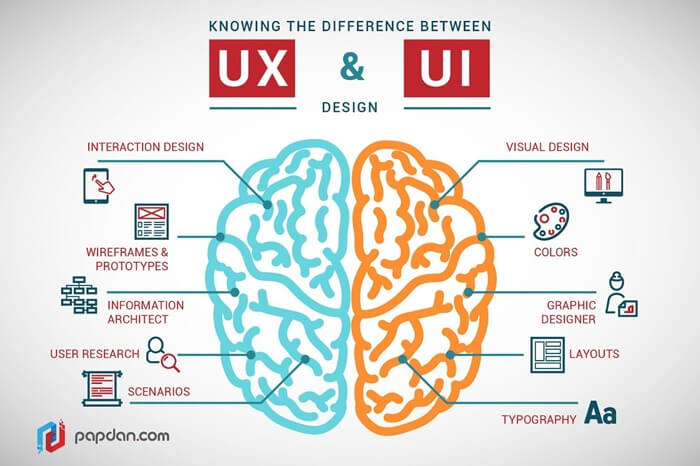
Ux and UI design


A Fundamental Moment in the Development of Digital Design

A key moment in the development of digital design was the realization that interaction with a product is not limited to its visual part. As Jesse James Garrett notes, UX design encompasses the entire interaction process with the product, from first impressions to post-sale service.

He introduced the model of five UX levels: strategy (goals and needs), scope (functional requirements), structure (information organization), skeleton (layout and interface), and surface (visual design). This model has profoundly influenced the development of UX design, helping designers to consider not only the visual aspects but also the structure and ease of interaction [5].

This concept is also reflected in the work of Alan Cooper, where he emphasizes the creation of “personas” (user personas), allowing designers to better understand the target audience and create products that truly solve their tasks. Cooper argues that good UX is one that solves real user problems rather than just being visually appealing [3].

The theories presented by Garrett and Cooper have become foundational in modern UX design, where the focus is on researching user needs, creating personas, and modeling user scenarios.


The Mobile Revolution and the Concept of “Mobile-First”

With the advent of smartphones and tablets, another significant turning point in digital design development occurred. With limited screen space and the need to optimize interaction, mobile design principles presented new challenges for designers.

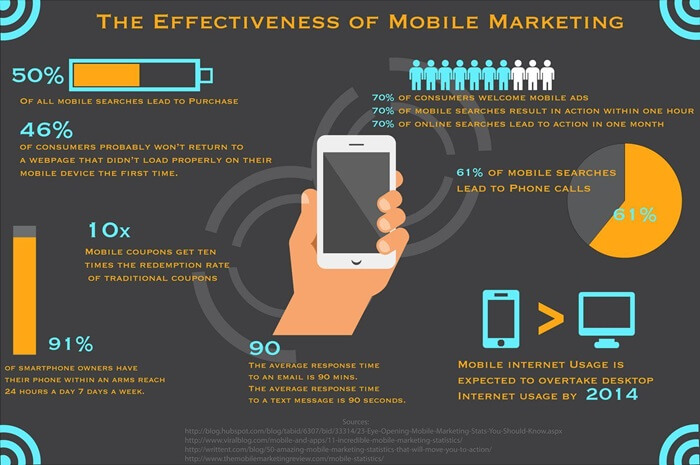
Thus, the main strategy of “Mobile-First” emerged. This means that design should be primarily oriented towards mobile devices and then adapted for larger screens. This shift was driven by the rapid increase in mobile users, making ease of use on small screens a critical factor in a product’s success. Mobile users are often on the move and distracted, so the importance of minimalism and clarity in mobile interfaces became paramount [4].


Mobile Marketing


The Postulates of “Mobile-First” Are Now the Standard for Most Digital Products

Adaptive design, which automatically adjusts to screen size, has become the norm, especially in web design and app development.

Also know: Best Data Visualization Software


The Future: Artificial Intelligence, AR/VR, and Personalization

Today, digital product design has become incredibly complex and diverse. There is a rapid development of trends such as adaptive design, the use of artificial intelligence and machine learning to create personalized user experiences, as well as the emergence of augmented and virtual reality. Design principles continue to evolve, adapting to new devices and technologies.

Artificial intelligence (AI) is already actively used to create personalized interfaces that adapt to user behavior and preferences in real time. Virtual reality (AR and VR) introduces entirely new types of interaction, presenting unique challenges for designers. Interfaces are no longer confined to screens, and users can interact with digital products in real physical spaces.

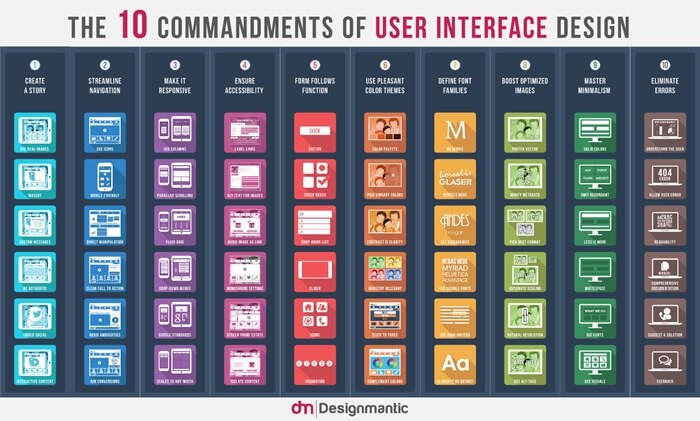
user interface design


In the future of design, personalization and new technologies will be dominant.

UX designers will need to create interfaces that are not only convenient but also dynamically adapt to the needs of each user.

The evolution of digital product design is a process that never stops. It keeps pace with technological progress and the changing expectations of users. From the first simple graphical interfaces to today’s complex UX systems, several decades have passed, but the primary goal remains the same: to create products that improve people’s lives and make interactions with technology intuitive and enjoyable.


References:

  1. Norman, D.A. The Design of Everyday Things. Revised and expanded edition. New York: Basic Books, 2013. 368 p.
  2. Nielsen, J. Usability Engineering. San Francisco: Morgan Kaufmann, 1993. 384 p.
  3. Cooper, A., Reimann, R., Cronin, D. About Face 3: The Essentials of Interaction Design. Indianapolis: Wiley, 2007. 610 p.
  4. Krug, S. Don’t Make Me Think: A Common Sense Approach to Web Usability. 2nd ed. Berkeley: New Riders, 2005. 201 p.
  5. Garrett, J.J. The Elements of User Experience: User-Centered Design for the Web and Beyond. 2nd ed. Berkeley: New Riders, 2010. 192 p.


Microsoft to Enhance Quality of Windows 10 Driver Updates

January 15, 2020
0

Windows 10 Updates by Microsoft is often known to have caused certain issues in the recent past and has therefore been a point of concern among many users. Now and then, we’ve seen various instances of Microsoft’s Windows Update installing device drivers that are incompatible with the latest versions of the operating system.

Although, Microsoft has recently declared that it has finally found a way of dealing with the incompatible driver issues installed through Windows 10 Updates.

As per the recent reports from Microsoft, “We have been providing temporary solutions until now by withholding the OS updates of a device. These devices are blocked until a fix is released via servicing. This doesn’t impact media installs though.”

“Further, a fix is in progress for issues that are reported to directly impact the OS after the installation of updates like driver crashes, BSOD, data loss, connectivity losses, security issues, etc.”

Microsoft’s OEM (Original Equipment Manufacturers) partner companies like HP, Dell, Intel, Lenovo, etc. would now be able to block any faulty driver version from reaching users via Windows Update. For this, the partner companies would have to submit a request to Microsoft. Whenever any device is operating on incompatible drivers, Microsoft’s partner companies can notify Microsoft to prevent pushing Windows Updates to those computers for upgrading particular features related to those drivers.

In the previous year, the sound system of various Windows 10 users had been disabled when Intel had accidentally pushed an incompatible driver to Windows 10 devices. This typically occurred when the incompatible driver had been pushed via Windows Update.

Another instance happened when Microsoft had released cumulative patch updates to fix issues related to Windows 10 May 2019 update. This particular patch update had led to the BSOD (Blue Screen of Death) error. Windows 10 users were reportedly facing a boot failure in combination with several other issues.

Other problems that have time and again troubled users are USB functioning issues, screen discoloration, higher CPU usage, etc. Windows 10 users have also encountered problems with Microsoft’s Edge browser. Experts had at that point suggested Windows 10 users from uninstalling the updates to get out of such messes.

Several Windows 10 Updates were blocked due to such repeated occurrences triggered primarily due to driver incompatibility. This is the common resolution from Microsoft’s end whenever they have been informed about the failure of updates arising due to incompatible drivers.

Microsoft blocks reported devices from downloading and installing the next available version of Windows 10. They also notify OEM partners about driver compatibility problems reported from users across the globe.

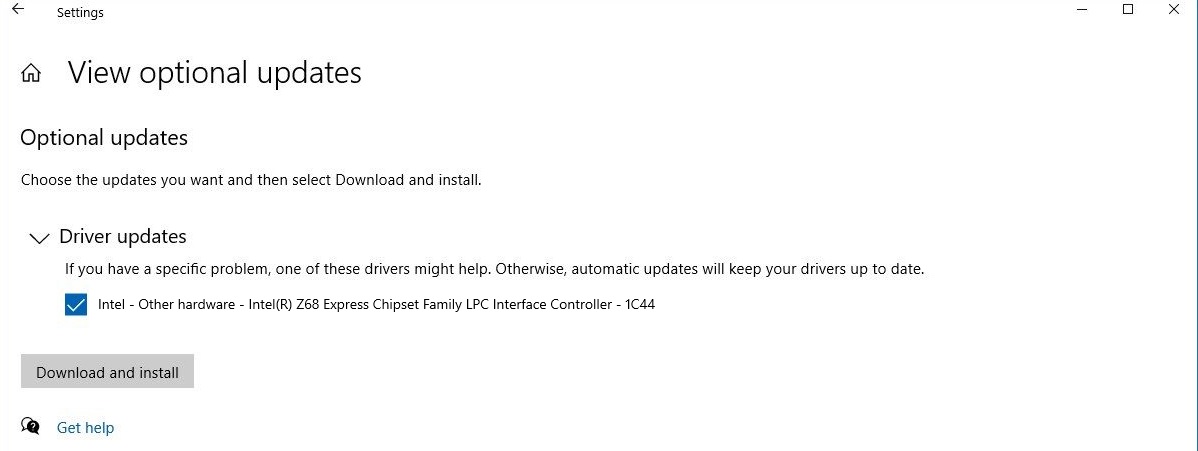
Windows 10 Driver Updates
Image Source: Windows Latest

Microsoft is also working towards bringing another modification in effect. According to this modification, Microsoft will not send new drivers two days before and after a Windows 10 feature update. Usually feature updates of Windows 10 are sent for installation on Windows 10 computers on Tuesdays, which is why it is called Patch Tuesday.

As in recent times, users have been avoiding the Windows 10 installation process to stop facing BSOD, data loss and various other issues, therefore, the latest changes on Microsoft’s part will hopefully address such issues for once and all.

1 Comment
    Kathey Frediani says: Reply
    October 17th 2023, 12:34 am

    Nice post. This is really very helpful.

Leave a Reply Cancel reply

Your email address will not be published. Required fields are marked *

Sidebar Image bit G ad1

Latest Posts

  • How to access all drives on this pc (1)
    How to Access All Drives on This PC in Windows 11 
    by Niharika / September 13, 2026
  • tpm msc access the trusted platform module (1)
    tpm.msc Command: How to Access the Trusted Platform Module (TPM) in Windows 
    by Niharika / September 12, 2026
  • sign in to hotmail in windows (1)
    How to Sign in to Hotmail in Windows 
    by Gunjita Sompura / September 11, 2026
  • How to Update Windows Security Signatures Manually 
    How to Update Windows Security Signatures Manually 
    by Niharika / September 10, 2026
  • How to Connect to Your PC Remotely on Windows 11  (1)
    How to Connect to Your PC Remotely on Windows 11 
    by Niharika / September 9, 2026

Categories

  • Cyber Security
  • Driver Updater
  • Entertainment
  • Fitness
  • Games
  • How To
  • laptop
  • OS
  • Reviews
  • Tech News
  • Tips & Tricks
  • Top 10
Sidebar Image bit G ad1
What is Blue Eyes Technology - Benefits and Usage What is Blue Eyes Technology - Benefits and Usage?by Prachi Dani / September 22, 2019
10 Best Ringtone Maker Apps For Android in 2020by Prachi Dani / September 24, 2019Best Ringtone Maker Apps For Android
TechPout Footer Logo

We at TechPout promise to put forth stories that help people to learn and simplify their digital life. Our purpose is to share the true essence of technology with our tech-loving community.

Useful Links

  • About Us
  • Contact us
  • Privacy Policy

Popular Posts

  • Best PC Optimizer Software
  • Best Mac Cleaner Apps
  • Best Driver Updater
  • Duplicate Photo Finder and Cleaner Software
  • Best Free Movie Download Sites
  • Best IPTV Players

Follow us

Copyright © 2026 www.techpout.com. All rights reserved
DMCA.com Protection Status